Showing posts with label Gaming. Show all posts

Wednesday, May 9, 2012

15 Years of Gaming, Part 17/Conclusion (2011)

Dead Space 2

Release Date: January 25, 2011.
Platform: PC/360/PS3
ESRB Rating: M
Developer/Publisher: Visceral Games/EA
GameRankings: 89.36%
Completely Arbitrary Personal Score: 8.8/10 (Very Good)
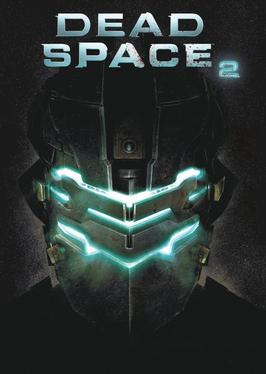

The difference between Dead Space 2 and it's predecessor is less dramatic than something like, say, the difference between Mass Effect and Mass Effect 2, but it is noticeable. Perhaps the area it is most noticeable is in the main character. Isaac Clarke was not much more than a cipher in the first game, nearly mute and not all that interesting. Aside from his obsession with finding Nicole, his erstwhile girlfriend, Isaac doesn't emit much personality. This was a measured and deliberate thing. I'm assuming the developers felt the various hallucinations and breaks in reality would seem much more frightening if the player could just as easily assume they were the ones experiencing it. This is certainly not a bad idea (the Half-Life series has nearly mastered it), but it left the main character not seeming all that important or much of a character.

Of all the improvements the second game makes (and there are many), it is this sudden burst of character from Isaac that is the most important. He's not the most interesting character, but the fact that is one at all improves the narrative of this game tenfold, specifically when Isaac makes a sacrifice near the game's conclusion (spoiler: he survives). All in all, the Dead Space series is proving to be one of the few EA-produced series worth anything at all, and I anticipate the third installment, whenever it may be.


Dragon Age II

Release Date: March 8, 2011.
Platform: 360/PS3/PC/Mac
ESRB Rating: M
Developer/Publisher: BioWare/EA
GameRankings: 80.37%
Completely Arbitrary Personal Score: 8.0/10 (Good)


Dragon Age II is possibly the most infamous game in BioWare's long and storied history. It is not, however, the worst. After the underground success that was Dragon Age: Origins (which, before I go any further, is a superior game, despite what my scores might say), Dragon Age II was one of the most heavily promoted and anticipated games in BioWare's history. To say it was a disappointment is an understatement. I don't believe this is because DAII is a bad game. Quite the contrary. I believe the backlash occurred because DAII was a poorly marketed game. People thought they were getting a true sequel to the original game. They were not. They were getting a loose continuation of the world in which the first game took place in. Dragon Age is as well written a game as anything on the open market, featuring interesting characters, a remarkable (if small in scope) array of areas, and a bevvy of strenuous political choices and motivations to wade through, like and good BioWare game. It might be a below standard offering by BioWare's standards, but it's still one of the better games of 2011, and worth playing. Most other companies should be so lucky to have such a good "worst" game.


Portal 2

Release Date: April 19, 2011.
Platform: 360/PS3/PC
ESRB Rating: E 10+
Developer/Publisher: Valve
GameRankings: 94.54%
Completely Arbitrary Personal Score: 9.4/10 (Great)
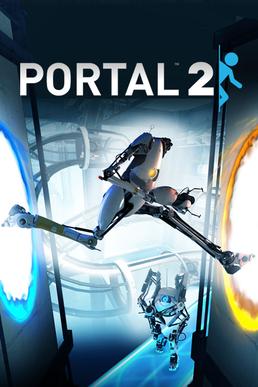


Valve, ever the master craftsmen, took a bit of a gamble with 2007's Portal. A gamble that unequivocally paid off. What was originally included as a bit of a bonus on the Orange Box became possibly the most successful and most fully-praised bit, making a sequel a near guarantee. Before release, Valve described Portal 2 as a full-fledged game where the original had been simply an experiment. There is no better way to describe the divide between Portal 2 and it's predecessor. Portal 2 is a fully-formed, fully-developed game. A game that takes everything good about the original (which was everything) and expands to a near-caricature (without taking that last little step into ridiculousness). It is truly a masterpiece of black humor. Stephen Merchant and J.K. Simmons are stupendously good in their roles, as is the returning Ellen McClain (who was literally the only voice actor in the original game.) Almost everything that was good about Portal is better in Portal 2. It has an interactive, context sensitive soundtrack, for crying out loud. Just a magnificent game. There is one minor caveat, however. Because it's an actual game, Portal 2 lacks a bit of the surprise of the original. You really had no idea what to expect from Portal 1. Short, elegant, to the point and unbearingly endearing, Portal was the quintessential post modern video game. Portal 2 is fantastic, but perhaps not quite as seminal in thought or execution. The co-op makes up for that, however.


L.A. Noire

Release Date: May 17, 2011.
Platform: 360/PS3/PC
ESRB Rating: M
Developer/Publisher: Team Bondi/Rockstar Games
GameRankings: 87.72%
Completely Arbitrary Personal Score: 9.1/10 (Great)


L.A. Noire was (and still is) one of the most interesting and unique undertakings in gaming history. So much so that, unlike ANY of the games on this list (excluding possibly the two Portal games), Noire has almost no basis in combat. More so even than a game like Mass Effect, it is based almost entirely on dialogue. Using a nigh-revolutionary motion capture facial system, Team Bondi created a conversation system that, while maybe a little static (you'll notice the same facial expressions constantly), manages to skirt the edge of the uncanny valley while still seeming realistic, something that's increasingly difficult to do. A game that is based on talking, investigating and wondering less than straightforward action is not rare to see, out of an indie or B title. Too see it from one of the biggest game companies in the world is different. Add in the excruciatingly re-created world and attention to detail, and you have a sandbox game every bit as engrossing as GTA IV or Red Dead Redemption. Maybe not a world as accessible or blindingly fun as either of those games, and certainly not as good, but perhaps a more seminal affair. In the end, Noire was an experiment, a new way of designing games set in the mold of a historical epic. I can easily see another great GTA game, and I can certainly see another game like RDR at some point in the future. I'm not sure if I ever see another game quite like L.A. Noire.


Deus Ex: Human Revolution

Release Date: August 23, 2011.
Platform: 360/PS3/PC
ESRB Rating: M
Developer/Publisher: Eidos Montreal/Square Enix
GameRankings: 89.41%
Completely Arbitrary Personal Score: 9.4/10 (Great)
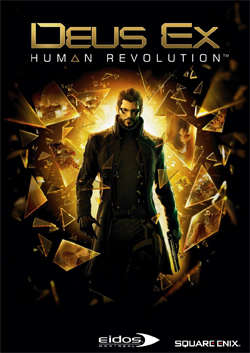


Every year, there's one game I never see coming. A game that I play on a whim that ends up utterly and completely captivating me. Deus Ex: Human Revolution is not only one of those games, it may be the ultimate version of one. I never played either of the original Deus Ex games. For someone who presents himself as something of a gaming connoisseur, not playing one of the most influential and proverbially game-changing works int he history of the medium is a bit of a shame, to be sure. Perhaps I was too young. Perhaps I wasn't privy to a computer capable of running it. Whatever the reason, the Deus Ex games were something of an unknown to me. That changed when I bought Human Revolution. Equal parts Blade Runner, Mass Effect, and Ghost in the Shell, Human Rev is one of the most visually arresting games I can remember playing, and an eternal testament to of one my favorite sayings in gaming: graphics aren't as important as art design.

Speaking of design, DX:HR is as wonderfully sounding a game as I can remember. The voice acting isn't flawless, but when it has to be good, it's wonderful. The sound design is as convincing as it is ethereal. The music is...my God, the music. Forceful, haunting and every bit perfect for the world it inhabits, the music is possibly this game's biggest strength.

All this effusive praise of the game's design might sound like I'm dodging what is arguably the most important aspect of any game: how it plays. Have no fear; Human Revolution plays marvelously. A hybrid shooter/rpg/stealth/puzzle game set in an imaginative and eerily prescient 2027. It plays extremely well. It's hard for me to recommend a game more than I can Deus Ex: Human Revolution. It lives up to a legacy I was never even sure existed, and does so by being it's own game. Not a perfect game, but as ambitious and engrossing a game as I can remember, full of ideas and wonder. Play it.


Gears of War 3

Release Date: September 20, 2011.
Platform: Xbox 360
ESRB Rating: M
Developer/Publisher: Epic Games/Microsoft Studios
GameRankings: 91.59%
Completely Arbitrary Personal Score: 8.7/10 (Very Good)
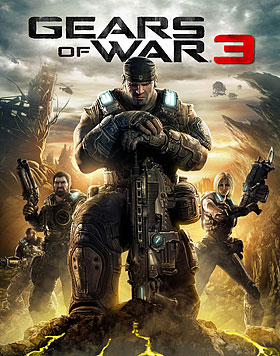

Gears of War 3 is all the platitudes you would want from the back end of a major trilogy. It wraps up the storyline started with 2006's Gears of War. It's bigger, badder and more entertaining. It's everything about the series distilled into it's purest, most effective form. And it picked a horrible year to release. 2011 is one of the strongest gaming years of this or any generation. For instance: I chose not to write about The Legend of Zelda: Skyward Sword for this year's edition, not because it wasn't good enough (it was fantastic), but because there were just too many other games, and I didn't feel like I played enough of SS to justify writing about it.

Gears of War 3 was very good, but I'm having trouble remembering it when so many other great games came out in close proximity. Gears 3 should have come out in 2010.


Batman: Arkham City

Release Date: October 18, 2011.
Platform: PS3/360/PC (Eventually Wii U)
ESRB Rating: M
Developer/Publisher: Rocksteady Studios/Warner Bros. Interactive Entertainment
GameRankings: 94.13%
Completely Arbitrary Personal Score: 9.3/10 (Great)


Batman: Arkham Asylum was one of those games I mentioned earlier: a total surprise that ended up being one of the best games of it's year. Batman: Arkham City, the sequel, had no such luxury. What very easily could have fallen victim to a bevy of unrealistic expectations (most of which from yours truly), Arkham City ended up surpassing expectations to usurp the title of "best superhero game ever" from its predecessor. This is due, mainly, to one thing and one thing only: the city. While not as big an open world as something like Fallout or Grand Theft Auto, Arkham City brought a BioShock-like level of detail and a bevy of Batman's best villains, along with a huge amount of lesser-known cameos (Kevin Conroy as Hush in particular). From a gameplay perspective, it's bigger, more complex and more satisfying than it's predecessor, while featuring a more taught story (although I'm starting to doubt the possibility of this game occurring during only one night).

Atmospheric, visceral and thoroughly exciting, this is one of the four best games of its year, which is saying something in a year like 2011.


The Elder Scrolls V: Skyrim

Release Date: November 11, 2011.
Platform: Xbox 360/PlayStation 3
ESRB Rating: M
Developer/Publisher: Bethesda
GameRankings: 95%
Completely Arbitrary Personal Score: 9.5/10 (Legendary)


Here it is. Skyrim. Another installment in Bethesda's life-destroying Elder Scrolls series, Skyrim is, on the surface, one of the most ambitious looking and feeling games ever to exist. Digging a little deeper? It's still an amazingly, mindblowingly big, detailed and enjoyable game. But it's not perfect. Like all Bethesda games, there's too much size, too many variables, that can throw a proverbial wrench in the system. Glitches are as common as ever, and in a game this atmospheric, they can be near deal-breakers at times.

Moving past that (admittedly big) hiccup, Skyrim also benefits from the tightest and most engrossing main plotline of any of the Elder Scrolls games. And those dragons. Only after severe amounts of playtime and leveling do they cease to be among the most adrenaline-pumping boss fights in all of gaming. The soundtrack is ethereal yet substantially beautiful. Like all Bethesda open-world games, an inordinate amount of enjoyment can be had by just picking a direction and walking towards the horizon. The world of Skyrim, the nothern-most province of Tamriel, is a cold and unforgiving place, where the winds whip at you almost as hard as the predators do. Aside from the cities (some of the most intriguing in all of the series), every settlement feels vulnerable and wild. And yet, there is a strange warmth to this game. A feeling of belonging. One of the single most wondrous maps in all of gaming, Blackreach (if you haven't checked it out, do so immediately). Untold wonders await you in Skyrim. Here be dragons.


This concludes (for now), my 16-part 15 Years of Gaming segment. By no means are these all of the games I have liked in my lifetime. These are just the ones I felt I had something to say about. If this is your first time or you've read them all, thank you, immensely, for reading. This has been maybe the first large-scale personal project I can remember completing, and easily the most fun. I'll probably be doing a 2012 round-up sometime in December or January, but this is the end of my scheduled reviews/recaps.

Saturday, March 24, 2012

15 Years of Gaming, Part 16 (2010)

Mass Effect 2
Release Date: January 26, 2010.
Platform: 360/PC (later PS3)
ESRB Rating: M
Developer/Publisher: BioWare/EA
GameRankings: 95.6%
Completely Arbitrary Personal Score: 9.6/10 (Legendary)


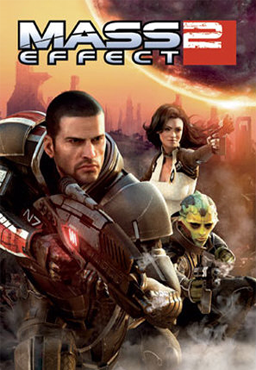
Look past the horrific box art. Look past the meandering, confused main plotline that only really pays off at the very end. Look past the relative lack of RPG elements. What's left is still one of the most daring, absorbing and best games ever made. The original Mass Effect, while certainly a great game, perhaps reached a little too far, a little too high. The concepts were great, but the execution (and more importantly the polish), was underwhelming at times, ending sequences aside. It was very much an experiment, albeit a high budget, Triple A one.

The second Mass Effect suffers from no such lack of polish. It's staggeringly massive and detailed, featuring a cast of characters at least double in size of the first, and yet no less intriguing. In fact, it's in the other characters in your party that this game truly shines. Their personal quests are among the most involving and high-stakes in the entire game, as they all look to Commander Shepard to help them put their affairs in order before what looks to be a suicide mission. Except that it isn't. Or it is, depending on how you play your proverbial cards, and how prepared those cards are.

This is possibly BioWare's magnum opus (at least until the third game comes out) and one of the best games of this new decade, full stop. I recommend it heavily if you haven't played it (or the first one), or even if hardcore, old school sci-fi mixed with adrenaline pumping action on a scale not usually seen in video games is your thing. It should be.


BioShock 2
Release Date: February 9, 2010.
Platform: PS3/360/PC
ESRB Rating: M
Developer/Publisher: 2k Marin/2k Games
GameRankings: 87.87%
Completely Arbitrary Personal Score: 8.5/10 (Very Good)


BioShock 2 is a game I wasn't sure I thought should exist. The original ended on a nearly pitch-perfect tone, and the sequel wasn't even being made by all the same people. By all rights, it was an unnecessary and possibly terrible game. It wasn't. While the plots and twists weren't as sharp and shocking as the first one, the protagonist and the pacing were miles better, and while the setting and ideologies behind the game were wearing a little thin, the gameplay was arguably better (which was a weak point I found with the original). It's not as good as BioShock, but few games are. It expanded and elaborated upon almost everything that was great about the original.

I will say this, however. It's probably a good thing that the next BioShock isn't set in Rapture. I'm would have had a hard time believing there are any splicers left to kill if there was a third game set in Andrew Ryan's underwater dystopia.


Final Fantasy XIII
Release Date: March 9, 2010.
Platform: PS3/360
ESRB Rating: T
Developer/Publisher: Square Enix
GameRankings: 85.17%
Completely Arbitrary Personal Score: 8.3/10 (Good)


The Final Fantasy series is one that has been slowly fighting the passage of time over the last decade. 2001 saw the release of Final Fantasy X, in my opinion one of the two or three best of the entire series, and the last entry to follow the tried and true turn-based methodology followed by all the others. Since then, the series has scrabbled to find it's way in a more modern gaming landscape. FF12, while a good game, held very little of the magic so often found in its predecessors. FF13 perhaps captures a little more of that old charm that made the Final Fantasy series one of my favorites growing up. The combat system is fluid and truly original, instead of being the clunky clone found in FF12. The characters, while still annoying for long stretches of time, were maybe a little more indelible than those found in 12. The setting, while not as iconic as Ivalice, is visually striking (even if a few too many hours are spent in the same places). FF13 is not a bad game. In fact, it's a better game than 12. But it's not great. And it's still a lateral step rather than a forward one. FFX was a last great gasp. Everything since then has been a wheeze.


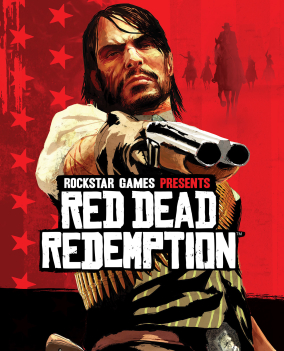
Red Dead Redemption
Release Date: May 18, 2010.
Platform: PS3/360
ESRB Rating: M
Developer/Publisher: Rockstar North/Rockstar Games
GameRankings: 94.18%
Completely Arbitrary Personal Score: 9.3/10 (Great)


Manifest Destiny. If there's any phrase that describes Red Dead Redemption, it's this one. The year is 1911. The old west is at it's end. Civilization is spreading, unchecked and unstoppable. The only thing worse than the lawless men who terrorize the wilderness are the civilized men who control it. This might be sounding a little pompous, but if there's anything this game is about, it's the expanding moral bankruptcy of the fledgling American Empire.

How does this translate to a game instead of a concept? Quite well. Few games, if any, quite capture the essence of loneliness like RDR does. It's not the biggest open world in gaming, but sometimes it feels like it, taking place over an extremely diverse landscape that combines pastiches of Texas, New Mexico, Arizona, Colorado and, like all good westerns, Mexico. Speaking of good westerns, many of the characters, towns and situations are homages to many of the great westerns (most noticeable is the Man With No Name's poncho).

Red Dead Redemption sits alone in the history of gaming as a singularly lonely work, one that combines the reality and the fiction of the old west into a sad, desperate game that is as affecting as anything Rockstar has ever done. And it's damned fun to boot.


Halo: Reach
Release Date: September 14, 2010.
Platform: Xbox 360
ESRB Rating: M
Developer/Publisher: Bungie/Microsoft Game Studios
GameRankings: 91.71%
Completely Arbitrary Personal Score: 9.1/10 (Great)


The Halo series has never been one praised for it's realistic depictions of war. And for good reason. For the most part, these games are high sci-fantasy, starring an invincible cyborg as he fights valiantly against an unstoppable alien horde and boogeyman from the darkest corners of the id. But there is, despite what you might think, despite what you may have been lead to believe, more. The same sort of "more" that was in 2009's dark little masterpiece ODST. The same sort of "more" you might find in an actual wartime scenario: the prolonging of the inevitable. It's readily apparent, early  on (even without the sort of familiarity with the background material of the Halo universe that I'm writing from) that the battle for Reach will be lost. No matter what you do, no matter what your squad does, you will lose. But that doesn't mean you can't die trying. And die trying you do.

With every "we just need to buy some time," to every "we still have a chance" in the script, that experience of sacrifice paints the narrative of Halo: Reach in shades the other Halo games never really had to use. As Bungie's swan song, it does as good a job as possible in encapsulating what made the Halo games maybe THE premiere series of the 2000s, while simultaneously being different enough from the other games in tone to be it's own legitimate game. From the start, you that it's the end, in more way than one.


Fallout: New Vegas
Release Date: October 19, 2010.
Platform: PC/360/PS3
ESRB Rating: M
Developer/Publisher: Obsidian Entertainment/Bethesda Softworks
GameRankings: 83.8%
Completely Arbitrary Personal Score: 8.6/10 (Very Good)


New Vegas is another 2010 sequel that, to begin with, I wasn't sure should exist. Fallout 3 was such a singular, wonderful title, that I wasn't convinced that a sequel, a sequel developed by another studio nonetheless, was necessary. And, much like BioShock 2, I was wrong. Where that game built off what was good about the original, with minor additions, Fallout: New Vegas builds off of what's different about it than it's predecessor. It's similar to Fallout 3 in setting and name. That's about it. Set in the significantly more developed area around what used to be Las Vegas, New Vegas takes place in a more political world. Notice I didn't use the word "civilized." Nothing in the Fallout universe can ever hope to have such lofty aspirations.

Fallout: New Vegas isn't as good as its decorated predecessor, but then again, few games are. It comes close enough (while being different enough) to come wholly recommended to anyone who knows that war never changes.


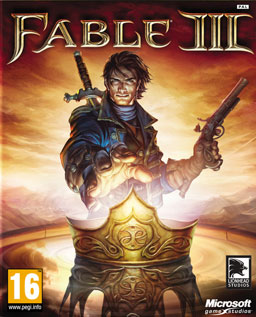
Fable III
Release Date: October 26, 2010.
Platform: Xbox 360/PC
ESRB Rating: M
Developer/Publisher: Lionhead Studios/Microsoft Game Studios
GameRankings: 80.52%
Completely Arbitrary Personal Score: 7.9/10 (Above Average)


Fable III is unique among the series for finally, finally, living up to at least some of Peter Molyneux's lofty praise and otherwordly hype. After twice promising the moon and delivering just a Polaroid, Molyneux's final (?) entry into the Fable series is the biggest, most ambitious, most tensely plotted entry in the series. That doesn't mean it's the best.

Where the third game differs from the others is in it's political aspirations. The hero does not become any more powerful, in a video game sense, than either of the other Fable protagonists, but he or she does become significantly more powerful politically. Where the second game saw you become a king, the third game sees you become a ruler. Alliances, economics, treaties: everything that one could reasonably expect to come with being a monarch is present in some form or another, and it adds a touch of Real Time Strategy that I found both surprising and refreshing for a game of this type. Another great addition is the co-op feature, which allows a friend to join your game (with their hero) at any point in time, building their character to be just a strong physically as you. While it's nothing novel, it is well implemented.

Why isn't Fable III the best in the series? For precisely the same reason. The first game was simply the journey of a kid growing into an adult, and maybe saving the world along the way. There was a sense of anonymity and...wonder that seems to be lacking (purposefully so) in the sequels. I really can't describe it. That being said, Fable III is still wonders better than the second game. Also, Stephen Fry and John Cleese are in this game. That's certainly never a negative.


Thursday, February 9, 2012

15 Years of Gaming, Part 15 (2009)

Batman: Arkham Asylum
Release Date: August 25, 2009.
Platform: PS3/360/PC/Mac
ESRB Rating: T
Developer/Publisher: Rocksteady Studios/Eidos Interactive
GameRankings: 92%
Completely Arbitrary Personal Score: 9.3/10 (Great)


This might surprise you coming from the biggest Batman fan you'll meet, but I wasn't sold on Arkham Asylum until a couple weeks before I played it. It looked fun, but maybe a little too much of a beat-em-up to be the Batman game to end all Batman games. It seemed...lacking, is perhaps the word. That is until I found out that Paul Dini, producer and writer of Batman: the Animated Series was involved. Not to mention Kevin Conroy as Batman, Mark Hamill as the Joker and Arleen Sorkin as Harley Quinn. Four of the biggest parts of what made the Animated Series one of the best things about my childhood were in place, and I was intrigued.

Then the game had to be better than I had ever hoped or imagined it would. Dark, claustrophobic and unmistakably Batman to the core, Arkham Asylum remains one of the most pleasant surprises in the history of my gaming fandom. It was brilliant beyond hyperbole, mixing the heart and humanity of the Animated Series with the dark thematic brilliance of the best graphic novels and the breakneck pacing of the Nolan films, Batman: Arkham Asylum is maybe the quintessential Batman work of the past 15 years.

One of the things the Batman mythos has always operated on is the concept of fear. Both in how a man in a bat costume can manage to be so terrifying, and how that same man's fears are both what drive him in his quest, and what arguably makes him as insane as the maniacs he regularly defeats and locks up in the eponymous Asylum in never-ending battle for Gotham's fate.

So, yeah. I enjoyed Arkham Asylum a little.


Halo 3: ODST
Release Date: September 22, 2009.
Platform: Xbox 360
ESRB Rating: M
Developer/Publisher: Bungie/Microsoft Game Studios
GameRankings: 85.14%
Completely Arbitrary Personal Score: 8.8/10 (Very Good)


There are those among Halo-fandom who will tell you that Halo 3: ODST is the worst thing the series has ever produced. Those people, while technically right, are missing the point. ODST is easily the most unique and experimental of the Halo games. Set during Halo 2's storyline, the game follows the exploits of squad of eponymous UNSC troopers lost in the destroyed and conquered city of New Mombasa.

To be honest, the setting and plot of ODST are less important than the atmosphere. Fallout 3 aside, this game does as well as any other in illustrating the effects of loneliness on the human psyche. The "flashback" levels that occur whenever you discover evidence of the rest of your squad are fun, but more traditional Halo sequences. It's what happens while you're looking for said evidence that sets this game apart. Traversing through a decimated city, with the rain coming down just light enough to keep the fires going, never sure if the next alleyway will take you where you're wanting to go or just another dead end is truly magical, and is more than enough to warrant to full price tag this game demanded, despite being an expansion. The soundtrack stands at the top of Marty O'Donnell's already majestic work on the Halo series. Everything about this game is dark and unique like very few things that came before it. There's not really any way for me to describe it other than by giving you a gameplay video. It took me a while to find one with no voiceovers.


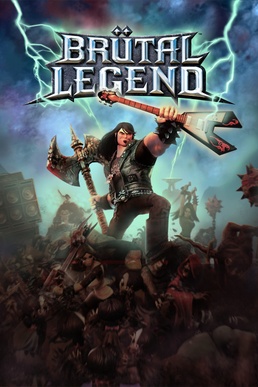
Brutal Legend
Release Date: October 13, 2009.
Platform: PS3/360
ESRB Rating: M
Developer/Publisher: Double Fine/EA
GameRankings: 80.9%
Completely Arbitrary Personal Score: 7.4/10 (Solid)


Tim Schafer is one of the funniest and most original people in gaming. While I understand Jack Black isn't everyone's cup of tea, the prospect of him working with Tim Schafer to make a game about heavy metal was a very intriguing idea. I have to say, despite whatever ever else comes out of this review, it worked. Brutal Legend is a funny, original game that draws upon the vast and epic history of one of the most deeply beloved genres of music to deliver a truly unique and interesting experience.

It sort of never really goes past that concept and becomes an actual game, however. It's fun, but only overcomes being a VERY generic slasher when it attempts to become some sort of hybrid action/first person RTS game, and it only works with middling results.

Still, this is an uncommonly clever game, and it sometimes very funny. Lemmy Kilmister, Rob Halford and Ozzy Osbourne are in it, and that certainly can't be a bad thing.


Dragon Age: Origins
Release Date: November 3, 2009.
Platform: Xbox 360/PC
ESRB Rating: M
Developer/Publisher: BioWare/EA
GameRankings: 90.5% (PC version)
Completely Arbitrary Personal Score: 8.6/10 (Very Good)


Dragon Age was the first medieval based, "swords and sorcery" style original IP from BioWare since the halcyon days of the Baldur's Gate games in the early 2000s. As is fitting for a company as good as BioWare, they appeared to have lost none of their touch. Dragon Age is an wonderfully expansive game, filled to the brim with the sort of political strife and ethical grey areas that are so often commonplace in a BW game.

The gameplay, while easily seen as being tailored to the PC, was still more than acceptable on the console port (which I played, having not had a high-end gaming computer since 2004 or so). All in all, despite the game's high pedigree and even higher quality, it ended up being a much quieter game, in tone and in presentation, than I had become accustomed to. That isn't to say that I don't understand the opinion that it's just as good as KOTOR or Mass Effect, just that it didn't seem to be operating at its full capacity. I felt like it could have been more.

Still, what it was was one of the best games of 2009, and just another example of the mastery BioWare had developed over gaming.


Call of Duty: Modern Warfare 2
Release Date: November 10, 2009.
Platform: PC/360/PS3
ESRB Rating: M
Developer/Publisher: Infinity Ward/Activision
GameRankings: 93.39%
Completely Arbitrary Personal Score: 8.2/10 (Good)


Like most sequels, Modern Warfare 2 suffers from expectations. Not to say that it wasn't as good as the original, or even that it wasn't as good as expected, just that everyone pretty much knew what it would be. What made the original Modern Warfare such a surprise for most people was how much more intense and fluid it was than the other Call of Duty games (also how many risks it took from a storyline perspective). The second game, while certainly rife with memorable moments, falls into the unfortunate trap of being functionally indistinguishable from its predecessor. When you can't tell, offhand, if a certain set piece comes from a the first or the second game, that can only hurt the second. The first is what people remember. The second is what people forget.


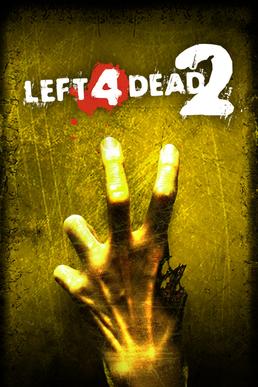
Left 4 Dead 2
Release Date: November 17, 2009.
Platform: 360/PC/Mac
ESRB Rating: M
Developer/Publisher: Valve
GameRankings: 89.21%
Completely Arbitrary Personal Score: 7.2/10 (Solid)


Let's get something out of the way right off the bat: I didn't think there should have been a sequel to Left 4 Dead, at least not immediately. I admit to being more than a little upset that Valve thought this game was more important than making a new Half-Life game. Thankfully, I was able to put that aside when I played L4D2. That doesn't mean I thought it was any better than the original. Honestly, it suffers from a lot of the same problems as Modern Warfare 2 does: functionally, it's not really distinguishable from the first. It follows the same formula, with the same engine, with similar (if slightly more enjoyable) characters and locations. It does a few new things, but the same basic formula, both online and off, maybe isn't the best way to go about releasing a sequel less than a year after the original.

It helps that said formula is still pretty enjoyable, but it doesn't quite do enough to not make this game a slight disappointment. I'm probably less excited, to this day, about this game than any other game Valve has ever made.


Tuesday, January 17, 2012

15 Years of Gaming, Part 14 (2008)

Lost Odyssey
Release Date: February 12, 2008.
Platform: Xbox 360
Developer/Publisher: Mistwalker/Microsoft Game Studios
ESRB Rating: T
GameRankings: 79.8%
Completely Arbitrary Personal Score: 8.2/10 (Good)


Lost Odyssey is a game ten years too late. Had it come out in 1998, it would been considered just as good as any of the Japanese RPGs of that age. Created by Hironobu Sakaguchi, the original creator of the Final Fantasy series and his Mistwalker Corporation, Lost Odyssey is in many ways a throwback to the kind strictly turn-based combat systems seen in games a decade earlier, which might as well be a lifetime when video games are concerned. This is not to say that Lost Odyssey is a relic, or that it plays like it's ten years old. Smooth production values and a sprawling storyline make it every bit as engaging in 2008 as it would have been in 1998.

But to be honest, the gameplay is a secondary draw behind the "Thousand Years of Dreams" feature, a series of short stories based around the exploits of Kaim, the game's immortal protagonist. These stories are calm, short interludes in the life of Kaim, often highlighting the trials and tribulations that come from knowing everyone you meet will die before you do. They're subtle, often beautifully written pieces that ramp up the game's enjoyment factor a dozen-fold.


Super Smash Bros.: Brawl
Release Date: March 3, 2009.
Platform: Nintendo Wii
Developer/Publisher: Nintendo
ESRB Rating: T
GameRankings: 92.75%
Completely Arbitrary Personal Score: 8.5/10 (Very Good)


In Super Smash Brothers Brawl, the series trademark craziness seems to finally run a little thin, at least to me. Maybe it's my age relative to the other entries, maybe it's the inherent wonkiness of the Wii's controls (playing it with a GameCube controller helps, but obviously wasn't the original intent), maybe it's the so-called story mode that plays itself a little too seriously at times. Whatever the reason, I wasn't nearly as into SSB Brawl as I was either of the first two installments, especially 2001's Melee.

All that aside, it's still damned entertaining. Not really a whole lot else to say. If you enjoy these games, you'll have enjoyed Brawl. You know what it's all about.


Grand Theft Auto IV
Release Date: April 28, 2009.
Platform: PS3/360/PC
Developer/Publisher: Rockstar Games
ESRB Rating: M
GameRankings: 96.2%
Completely Arbitrary Personal Score: 9.4/10 (Great)


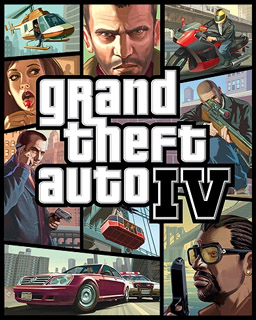
Where the previous entries were nearly games, Grand Theft Auto IV is an experience. Where the previous games got by on sophomoric, (if occasionally hilarious) parody-based humor, GTA IV got by with a more serious, almost misanthropic view of American culture and Americans in general. Because of this, the series' trademark humor is elevated from merely interesting to venomous social satire, and the trademark violence is elevated from mere entertainment to a sort of social commentary on the role violence has in our culture. This is not to say that the story elements are necessarily any better than even San Andreas, but it is perhaps told more organically, moving naturally from island to island in a progression that feels more natural that the sometimes stilted storylines of the previous games.

And speaking of the islands, Liberty City in GTA IV is perhaps the deepest, most interactive, most vividly alive cityscape in all of gaming. It is, upon first play, truly mesmerizing. The attention to detail and to capturing the feel of New York City is as intricate and beautiful as anything every accomplished in a video game. This game really catapulted Rockstar into the upper echelon of game makers (a spot where it rightfully should have been all along). After this, the studio went from simply capturing the feel of a place (think of Vice City/Miami) to capturing the feel of a time. This game is the best in the series, the best in the genre, and one of the best ever to exist.Grand Theft Auto IV is the American Dream. They call it the American Dream because you have to be asleep to believe it.


And here's the theme song, just because that wasn't a gameplay video.


Soul Calibur IV
Release Date: July 29, 2008.
Platform: PS3/360
Developer/Publisher: Project Soul/Namco Bandai
ESRB Rating: T
GameRankings: 85%
Completely Arbitrary Personal Score: 7.6/10 (Above Average)


You'll never hear me say this again, but I sort of wish someone had decided against using Star Wars. Soul Calibur IV is a very good installment of what is my own personal favorite fighting game franchise (which isn't saying much considering I'm not much of a fighting fan), but it was slightly ruined by the inclusion of three Star Wars characters, in anticipation of the release of the game directly succeeding this one on the list. It's really an unnatural combination, unlike guest characters in previous Soul Calibur games. Despite all of that, it really is a good game, maybe the best in the series. The character customization is superb, and the series' trademark depth is retained and expanded upon. Sure, a few characters (Mitsurugi) are still unbalanced, and sure, a few characters exist as nothing more than creepily oversexualized caricatures (Ivy), but it's still Soul Calibur, and it's still very good.

Despite all my whining about the Star Wars stuff before, this game is the closest we've yet to come to the good SW fighting game I've wanted my entire life. Imagine the people from Project Soul making a Star Wars fighting game with dozens of characters.


Star Wars: The Force Unleashed
Release Date: September 18, 2008.
Platform: PS3/360/Wii
Developer/Publisher: LucasArts/Activision
ESRB Rating: T
GameRankings: 74%
Completely Arbitrary Personal Score: 7.1/10 (Solid)


First and foremost, The Force Unleashed is an exercise in wasted potential. While not a bad game, it had the look, feel, and pedigree of a game that could have been great. That should have been great. As the centerpiece of the biggest multimedia project undertaken by LucasArts since Shadows of the Empire, TFU: the game was meant to be the Star Wars action game to end all Star Wars action games. It ended up being merely good.

Set in between the two trilogies, TFU stands as a perfectly decent go between between Episodes III and IV (referred to as "The Dark Times" in Star Wars canon). The plotline of the game is, in all honesty, a real strength, as is the performance of Sam Witwer as Starkiller, the game's main protagonist.

As far the action goes, it's pretty fantastically visceral, if a little thin. It's certainly fun, but the addition of a few too many quick time action sequences robs it of a little momentum, as does the enemy and level design. Also a horrible camera. Still, with the exception of the Jedi Knight series, no Star Wars game has captured the sheer power and brutality of being a lightsaber wielding badass as this game did.


Dead Space
Release Date: October 14, 2008.
Platform: PS3/360/PC
Developer/Publisher: EA Redwood Shores/EA
ESRB Rating: M
GameRankings: 89%
Completely Arbitrary Personal Score: 8.3/10 (Good)


Dead Space is, to put it simply, the Resident Evil of this generation. Darker, shadowier, and much more terrifying than the one-tone Resident Evil 5, Dead Space explodes out of the gate (more about it here), establishing a general tone of uncertainty and fearfulness that persists for the entire game. Set in an original sci-fi future (that originally reminded me of the Mass Effect universe), Dead Space takes place almost entirely on the U.S.S. Ishimura, a "planet-cracker" ship that has fallen silent. The player, in the role of mostly silent engineer Isaac Clarke (somewhat cleverly named after famed sci-fi writer Isacc Asimov and Arthur C. Clarke), investigates the ship along with a small crew, most of whom die terrible, gory deaths to the creatures that have taken over the ship. The combat is less military engagement and more survival, and the weapons, which are mainly re-purposed engineering tools, are satisfying and believable. One interesting thing to note is that, for a survival horror game, Dead Space manages to delve into some relatively deep themes, such as corporate negligence, the perils of religion on the frontier, and the impact of loss on the Human psyche. Not bad for what, by all standards, is a space zombie game.


Fable II
Release Date: October 21, 2008.
Platform: Xbox 360
Developer/Publisher: Lionhead Studios/Microsoft
ESRB Rating: M
GameRankings: 81.5%
Completely Arbitrary Personal Score: 7.6/10 (Above Average)


Fable II is a strange game. On one hand, it was the great equalizer for Peter Molynuex, his grand chance to atone for the perceived sins of pride he had committed with the original Fable. On the other hand, it's an even greater sin, as the game it supposedly was atoning for is actually a better game. Fable II has the same level of charm of British-ness that was a strength of the original, this time with a put-down industrial sheen that perhaps brings a little social criticism into the picture. Or maybe not. Really, I'm just giving lip service to the improvement Molynuex so obviously lived and died for.

That being said, this game does have possibly a more readily noticeable plot structure, and a better supporting cast. The gameplay, which is by no means unpleasant, is largely the same, which forces the setting to be where the improvements came from. They didn't. It's really unfortunate, to be honest. If Peter Molynuex would have just let this series speak for itself, it would have been rated where it belongs to be: very good. Not great, but good.


Fallout 3
Release Date: October 28, 2008.
Platform: PS3/360/PC
Developer/Publisher: Bethesda Game Studios/ZeniMax
ESRB Rating: M
GameRankings: 92.79%
Completely Arbitrary Personal Score: 9.4/10 (Great)


Fallout 3 is, without a doubt, one of the bleakest and least hopeful big market games ever created. I love it. As a modernized, open world realization of a beloved franchise long thought dead, Fallout 3 wasn't initially well-received upon its original reveal. "Oblivion with guns" it was called. They couldn't have been farther from the truth. What makes this game more than what it might have at first been thought to be is the setting. Set in a post-apocalyptic Washington D.C., Fallout 3 makes use of a multitude of recognizable locations, from the Washington Monument to the Capitol Building, to really hammer home one of the game's most enduring themes: than man's existence is inexorably tied to war. This can be seen not only in the semi-destructed state of our nation's capital, but in the depths of the subway and cave systems, where the player can find evidence of loneliness the type of which you can't usually see in games.

Another of the games' defining themes is the idea that despite our destructive nature, man persists. We survive. And indeed, while mostly small and primitive, the game's settlements are enjoyable not only in their steampunk aesthetic, but in their sheer doggedness.

Don't be mistaken, though, this game is more than setting and exploration. The combat system is possibly the greatest blend of turn based and shooting mechanics in the history of the medium, and the storyline expands slowly over time, moving from a simple quest to find your father to a battle for the very future of the Capital Wasteland. Fallout 3 is, quite possibly, the best game of 2008, which is a high compliment indeed when GTA IV is still around.


Gears of War 2
Release Date: November 7, 2008.
Platform: Xbox 360
Developer/Publisher: Epic Games/Microsoft
ESRB Rating: M
GameRankings: 93.3%
Completely Arbitrary Personal Score: 8.7/10 (Very Good)


Gears of War does everything we expect a sequel to do. It adheres to the gameplay formula that made the original such a success, while adding a mostly enjoyable amount of new weapons and mechanics. It builds off the story of the original, accepting a larger scope and more impactful endgame. It does everything the original did so well, but better. Then why don't I feel it was better? Perhaps it was because the original was, before release, very much an unknown quantity? Perhaps it was because for all its improvements, Gears 2 feels more impersonal and detached than the original?

It doesn't really matter, because Gears 2 is still a very, very good game, and it's still just as fun co-operatively, which I feel is the optimal way to play this entire series. Great fun.


Left 4 Dead
Release Date: November 18, 2008.
Platform: Xbox 360/PC
Developer/Publisher: Turtle Rock/Valve
ESRB Rating: M
GameRankings: 89%
Completely Arbitrary Personal Score: 7.3/10 (Solid)


If you had asked me in January 2009 what my favorite game of 2008 was, I might have said Left 4 Dead. I initially bought it after trading in Dead Space, which, while possibly the superior game, doesn't have all that much replay value. Left 4 Dead is a Valve game, which for me guarantees a level quality in design on which the game certainly delivers. Co-operatively, it might be the first modern game I've ever played that truly encourages working together, instead of just stealing each other's kills. The AI Director, which, in theory, is supposed to make every playthrough different, is great fun the first few times you use it. Enemies come from completely different directions during the normal, "run and gun" gameplay. What is maybe a little disappointing is how the big, back to the wall confrontations always play out in the same way.

Still, the ability to play the game co-operatively with up to three other people lends itself to a pretty enjoyable time, as does the online versus mode. All you need to remember about L4D is that it really isn't even a game. Just an experiment. Even Valve's experiments are ridiculously enjoyable.


Sunday, December 18, 2011

The Greatest Intros in Gaming History

One of the biggest changes in the way games immerse us is the introduction. What once could be accomplished by a few simple bars of text is now a work of art in its own right.

By "introductory sequences," I don't just mean opening cutscenes. I mean prologues, first levels, title seqeunces and, in some cases, expository sequences that provide the entirety of the setting and story background needed to create a fantastic gaming experience (looking at you, Half-Life 2). I'll be trying to limit the examples to one per series, as to not over-saturate the list with similar introductions.

So without, further adieu, here are some of my favorite intro sequences. I won't be numbering them, since I'm entirely sure how many I'm going to do, but rest assured, there will be a clear cut #1.

Enjoy.


Monday, October 31, 2011

15 Years of Gaming, Part 13 (2007)

2007 was a year of top-flight studios doing top-flight work. Everyone, from Bungie to BioWare to Infinity Ward, can lay a legitimate claim at being the best at what they do. Among everything else, however, this was a year of great intellectualism in video games. BioWare and Mass Effect are, in my opinion, two of the most cerebral games of their time, and that's not to mention the mind-bending brilliance of Portal. 2007 was very, very, good. Perhaps not as good as I might have thought when it happened, but hindsight has been kind to 07.


BioShock
Release Date: August 21, 2007.
Platform: 360 (PS3 in 2008)
ESRB Rating: M
Developer/Publisher: 2k Boston/2k Games
GameRankings: 95%
Completely Arbitrary Personal Score: 9.1/10 (Great)


As far as the "Games as Art" discussion goes, you probably agree with me, unless you're Roger Ebert (in which case, hello, Mr. Ebert! How are you? Thanks for reading!). Games are just as viable an art form as any other medium, albeit an art form still in its infancy, trying to figure out what works and what doesn't, working out its more sophomoric elements. This has defined the past 15 years in gaming as much as anything else, and seems to be the one hurdle games will need to clear in order to be recognized by the arts (not necessarily by the public, as "art" is rarely a major selling point).

There will come a time when BioShock is recognized as a turning point in that struggle. Set in an underwater objectivist dystopia, BioShock is as much "Atlas Shrugged" as it is "Doom." Creepy, atmospheric and sometimes downright chilling, BioShock's world design set a new standard in attention to detail. Unfortunately, for me, that is where its brilliance ends. While by no means a boring game, the gameplay left something to be desired, at least compared to more polished shooters, and the plotline itself was merely average, with perhaps a few standard moments ("Would You Kindly go up to Ryan's office, and kill the son of a bitch?"). It really came to the point where finding audio tapes, piecing together Rapture's fall and exploring the breathtaking views of the North Atlantic ocean floor were more entertaining to me that anything to do with Fontaine or Ryan.


Halo 3
Release Date: September 25, 2007.
Platform: Xbox 360
ESRB Rating: M
Developer/Publisher: Bungie/Microsoft
GameRankings: 93.53%
Completely Arbitrary Personal Score: 9.3/10 (Great)


The end of the original Halo trilogy (I say that because the upcoming Halo 4 is meant to be the beginning of a second trilogy) was, honestly, shorter than I anticipated. But it, at least, was a full game (ahem, Halo 2). A full game that brought up a lot of themes and situations first brought up in the first game full circle, themes that were, for the most part, neglected in the still stellar second game. It stands as the culmination of Bungie's vision for the series, a vision of a vast, vehicular space odyssey represented by the Covenant combined with the personal, almost claustrophobic horror of the Flood (who were finally a significantly less annoying foe).

The multiplayer was, to this date, the best multiplayer yet seen in one of the genre's most influential games. Halo 3 might not be the best Halo game, but it's certainly the most Halo-like, and still stands as one of the landmark games in the medium.


Half-Life 2: Episode Two/Portal/Team Fortress 2 (The Orange Box)
Release Date: October 10, 2007.
Platform: PC/360
ESRB Rating: M/T/M
Developer/Publisher: Valve
GameRankings: 90%/89.15%/92%
Completely Arbitrary Personal Score: 9.3/9.5/9.0 out of 10 (Great, on all counts)


I'm going to say this in no uncertain terms: The Orange Box is, to this point, the best deal in the history of videogaming. It's not even close. Not only do you get the three games listed in the description, but also the original Half-Life 2, updated for the 360, and the first sequel episode. Both of them have been detailed in this countdown before, so I won't spend any more time on them, suffice it to say both are worth playing an buying, not to mention the other games.

And make no mistake, those other games are all worthy of being on this list on their own. I just figured I should put them together for brevity's sake. I'll talk about them on their own, here, one by one.

First off is the most recent (grrr) game in the Half-Life series, Episode Two. A bigger, more diverse game than its direct predecessor, Episode Two ends on a cliffhange that is still just as affecting as it was in 2007, and takes the series in direction almost unthinkable based on the ending of the original HL2. The (then) three year old Source engine still looked magnificent.

Next we have Portal, which was, more or less, an experiment for Valve. Based off a student game called Narbacular Drop, Portal is, at its core, a physics simulator, albeit an extremely fun and funny one. Laced with a sense of dark humor the likes of which have rarely been seen in anything outside Monty Python. There's not a whole I can say about Portal that wouldn't spoil it for you if you haven't played it, aside for the fact that it is unlike anything that came before it. A sublimely unique experience.

And Team Fortress 2? Well, that's nothing but a hat simulator. Wish people still played it on the 360, though.


Call of Duty 4: Modern Warfare
Release Date: November 5, 2007.
Platform: PC/360/PS3
ESRB Rating: M
Developer/Publisher: Infinity Ward/Activision
GameRankings: 94%
Completely Arbitrary Personal Score: 8.3/10 (Good)


And here we have the first entry in the world's most popular gaming franchise. Which is actually the sixth (or so) entry in another of the world's most popular gaming franchises. A franchise I'm willing to bet at least 60% of current CoD fans have never played. Oh, who am I kidding? 60% of CoD fans have never even played the campaigns for the Modern Warfare games.

Modern Brofare fans aside, this was a solid shooter, full on intensity and the kind of historical attention to detail most military shooters can't even dream of. Good game, but pretty easily the worst of the good games this year, for me.


Mass Effect
Release Date: November 20, 2007.
Platform: 360/PC
ESRB Rating: M
Developer/Publisher: BioWare/Microsoft
GameRankings: 91.15%
Completely Arbitrary Personal Score: 9.2/10 (Great)


Ah, Mass Effect. Aside from Jade Empire (which, as I've covered, is a woefully overlooked game), Mass Effect was the first new IP from BioWare in quite some time, and they delivered magnificently. Set in a sort of amalgamate sci-fi universe, Mass Effect touches upon every good sci-fi cliche there is (and, to be fair, a few bad ones as well). Like most everything BioWare does, it's extremely well-written and paced, and features a plethora of interesting characters for the player to interact with and difficult moral quandaries from which the player must extricate themselves, all of which is supported by top flight voice acting (looking at you, Brandon Keener).

And, like all BioWare games, it's a game world that is believable as more than just an arena to shoot things in. It's a complex and intricate society, with its own history of prejudices and hopes and fears. Learning about these things (primarily though the wonderful Codex entries) is a significant part of the game's brilliance. But more than that, it's a remarkably interesting universe to look at and, eventually, explore. The galactic exploration system was nothing short of breathtaking upon first playthrough, and it never really gets old. The great vacuum of space has never looked so interesting.


Sunday, October 30, 2011

15 Years of Gaming, Part 12 (2006)

2006 was the first full year of life for the Xbox 360, and it was a year dominated by that machine. Despite a litany of hardware problems, the 360 jumped out to a lead that it only recently lost to the Play Station 3. I bought a 360 in June of this year.


The Elder Scrolls IV: Oblivion
Release Date: March 20, 2006
Platform: Xbox 360/PC/PS3
ESRB Rating: M
Developer/Publisher: Bethesda Game Studios/2k Games
GameRankings: 94%
Completely Arbitrary Personal Score: 9.2/10 (Great)


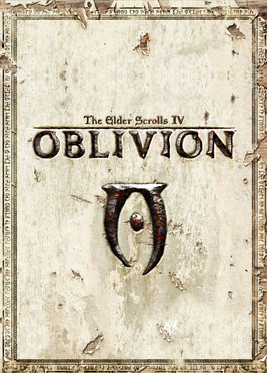
Here's an anecdote. In the summer of 2006 (late June/early July, mainly), my friend and I procured a copy of Oblivion for play on my still brand new Xbox 360. We played for, literally, an entire week. I beat the main storyline, he didn't. He beat the fighter's guild storyline, I didn't. Regardless, we both put at least 35 hours into it. I felt like I had gotten as much out of it as I had any other game I had ever played.

A few weeks later, I was talking to a different friend, one whom I consider the biggest Bethesda fan I know. He was telling me of some of the random things he'd done and found, and I came to a realization. He was talking about towns and dungeons I'd never even discovered, in areas I'd never ever been to. That should give you some inkling of just how huge Oblivion's game world is.

This should give you some sense of how beautiful it is. This game has one of the best night skies in the history of gaming.


Hitman: Blood Money
Release Date: May 30, 2006.
Platform: Xbox 360/PC/PS2/XBOX
ESRB Rating: M
Developer/Publisher: IO Interactive/Eidos
GameRankings: 82%
Completely Arbitrary Personal Score: 7.7/10 (Above Average)


I had never played a Hitman game before I downloaded the Blood Money demo on a whim. That was a good decision. Dark, stylish, and morally ambiguous, this entry in the series hinges (as I imagine they all do) on how, exactly, one would go about murdering seemingly untouchable people for money.

Not the most endearing premise, not the most endearing protagonist. But there's a certain charm in finding these solutions, and they never fail to deliver on their dark comedic potential.

Also, the credits sequence is possibly the greatest in the history of the medium.


Half-Life 2: Episode One
Release Date: June 1, 2006.
Platform: Xbox 360/PC/PS3
ESRB Rating: M
Developer/Publisher: Valve Corporation
GameRankings: 86%
Completely Arbitrary Personal Score: 8.8/10 (Very Good)


You won't find me spouting many (or any) negatives about the Half-Life games on here, but if there is one to be found about Episode One, it's that the game perhaps plays it safe a little too much. The majority of the game takes place in the same general area as the last third of the original HL2. From a plotting perspective, this makes sense, and it certainly doesn't mean the game is repetitive in any way, but it is perhaps a little unexpected from a series and developer so noted for their never-ending creativity.

All that being said, HOLY SHIT A NEW HALF-LIFE LESS THAN TWO YEARS AFTER THE LAST ONE.


Final Fantasy XII
Release Date: October 31, 2006.
Platform: PlayStation 2
ESRB Rating: T
Developer/Publisher: Square Enix/Ubisoft Entertainment
GameRankings: 90.64%
Completely Arbitrary Personal Score: 7.8/10 (Above Average)

Final Fantasy XII was billed by many reputable critics as the "Best Game of 2006." As much as it pains me to say, I heartily disagree. FFXII was, in many ways, an unmitigated train wreck. It's storyline, while by no means simple, seemed to lack the same impetus as the series' best. Maybe this should be blamed on the characters, who, for the most part, aren't nearly compelling enough to warrant making a 40+ hour journey with.

The gameplay seemed to me to be a derivative of KOTOR's battle system, and while this certainly wasn't a bad thing, it didn't come across as a more modern or necessary system than the pure turn based system the series had become famous with. FFX was still a blast to play in 2006 and it's still a blast to play now. If it a'int broke...

Still, FFXII was by no means a bad game. Being the least compelling Final Fantasy of the past ten years still means it was more compelling than most major games could ever aspire to be.


Guitar Hero II
Release Date: November 7, 2006.
Platform: Xbox 360/PlayStation 2
ESRB Rating: T
Developer/Publisher: Harmonix/Activision
GameRankings: 93%
Completely Arbitrary Personal Score: 7.6/10 (Above Average)

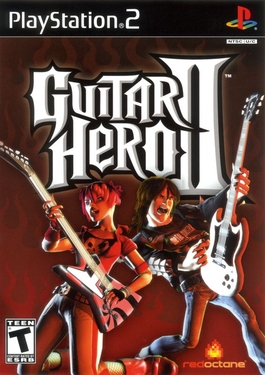
Behold! TWO COVERS!
The Guitar Hero series was, quite possibly, the biggest flash in the pan in the history of the entire medium. Appropriately, it was a one-hit wonder (that actually had two hits). The first game, while seen critically as ingenious, wasn't quite the pop culture phenomenon some would have you believe (though it was certainly an unexpected success). The second had a build up usually reserved for the Triple A developers (or at least a Madden game), and it really lived up to it.

Sure, there were still a disconcerting amount of cover versions, and sure, the game's difficulty curve would be better expressed as a difficulty cliff, but it was unimaginably fun to play, and never really seemed to lose that "just one more" luster, which is a rare feat indeed. There have been other (possibly better) games in the series since, but GH2 was the first one I played, so it holds a spot in my gaming heart the other's can't replicate.

Plus, it had "Trogdor" in it.


Gears of War
Release Date: November 7, 2006.
Platform: Xbox 360
ESRB Rating: M
Developer/Publisher: Epic Games/Microsoft Game Studios
GameRankings: 94%
Completely Arbitrary Personal Score: 9.0/10 (Great)


The Gears of War series has, perhaps more than any other, carried the proverbial torch for the Xbox 360. Released a little over a year after the system's debut, Gears (or GoW 1), blew away any and all expectations I had for it. Unique, visceral and maddeningly intense, it was the rare cover based shooting game in which you actually felt afraid to leave cover, for fear that poking your head out would cause you to lose it.

The game also had a very smooth control system and a driven, purposeful setting that really brought it's points home to you, managing to be that rare post-apocalyptic game that didn't feel like an epilogue to something. Perhaps the characters were a little one-note (as in, every character fulfills the same, exact note), and maybe the plot didn't delve as deep as the setting would seem to demand, but Gears 1 was blisteringly intense and well worth a play today, never mind when it came out.


The Legend of Zelda: Twilight Princess
Release Date: November 19, 2006.
Platform: Nintendo Wii/Gamecube
ESRB Rating: T
Developer/Publisher: Nintendo EAD
GameRankings: 95%
Completely Arbitrary Personal Score: 8.4/10 (Good)


Full disclosure: I never beat Twilight Princess. In fact, I barely played it. Perhaps four hours of my life have been spent playing this game. Then why is it on this list? Simple: it's a Zelda game, it's going to above average almost by default.

That being said, what I did play was damned good and seemed to be an interesting variation of the modern Zelda combat system we've all come to know and love over the past two decades.

Eventually, someone in my circle of close friends/family will get a Wii, and I'll play TP.