Tuesday, January 15, 2013

Fringe: The Ultimate Primer

The little sci-fi show that could, FOX's Fringe is about to experience something I'm sure hardly anyone who has routinely watched it during the past five years ever thought was possible: a proper series finale. As both a tribute to what has long been one of my favorite shows and a primer for the great majority of my friends who haven't seen it and should give it a shot, I'm making a list of the essential episodes.


Pilot (Season 1, Episode 1)
First Aired: September 8, 2008

The first episode is always important, no matter the show, but Fringe's pilot is especially so due to how often the rest of the show refers back to it, even past the first season. It's Olivia-heavy (before she was a real character), but does well to leave an impact and a driving vision for what this show would become.

The Arrival (Season 1, Episode 4)
First Aired: September 30, 2008

The first so-called "mythology episode," The Arrival heralds the...well arrival of the Observer into the storyline, and his interaction with Peter near the conclusion had the same effect on me as it did the younger Bishop: I had to know more.

Ability (Season 1, Episode 14)
First Aired: February 10, 2009

The episode prior to this, "In Which We Meet Mr. Jones," is very good and helps understand the still-burgeoning ZFT plot, but it's this episode that sees it hit the next level, and along with introducing Olivia's Cortexiphan storyline, serves to usher in the first season-spanning plotline in the show's run. Plus, it's really good.

Inner Child (Season 1, Episode 15)
First Aired: April 7, 2009

Inarguably the weakest of the Season 1 episodes highlighted here, this episode is important because it introduces the Observer Child (whom Season 5 viewers know as Michael), a long-dormant plotline suddenly brought back up in time for the finale. That being said, this is a good example of a stand-alone Fringe episode, and it helps flesh out Olivia's character a little more, something the first season desperately needed.

Bad Dreams (Season 1, Episode 17)
First Aired: April 21, 2009

By most counts, this is the first truly great episode in this show's run. Expanding the Cortexiphan storyline while simultaneously bringing an intriguing, mysterious and satisfying mystery plot, this is the standard which the rest of the first season aspires to.

The Road Not Taken (Season 1, Episode 19)
First Aired: May 5, 2009

The unofficial first part of the Season 1 finale, The Road Not Taken manages to tie together the seemingly disparate ZFT and Cortexiphan plots, while deftly doing away with the regrettable Agent Harris plot (the less said about that character, the better). What makes it even more impressive is the way it just sort of sneaks in the alternate universe stuff, which would come to be the trademark of the show in Season 2.

There's More Than One of Everything (Season 1, Episode 20)
First Aired: May 12, 2009

Continuing that thread, the Season 1 finale accepts the challenge that alternate universe sideplots seem to pose to sci-fi shows, and does it so suddenly and confidently that to this day, the final shot of this episode remains one of my favorite in any episode of television. Also, Leonard Nimoy shows up.

Momentum Deferred (Season 2, Episode 4)
First Aired: October 8, 2009

Grey Matters (Season 2, Episode 10)
First Aired: December 10, 2009

Jacksonville (Season 2, Episode 15)
First Aired: February 4, 2010

Peter (Season 2, Episode 16)
First Aired: April 1, 2010

White Tulip (Season 2, Episode 18)
First Aired: April 15, 2010

The Man From the Other Side (Season 2, Episode 19)
First Aired: April 22, 2010

Over There, Parts 1 and 2 (Season 2, Episodes 22/23)
First Aired: May 13 and 20, 2010

Olivia (Season 3, Episode 1)
First Aired: September 23, 2010

The Plateau (Season 3, Episode 3)
First Aired: October 7, 2010

Do Shapeshifters Dream of Electric Sheep? (Season 3, Episode 4)
First Aired: October 14, 2010

Entrada (Season 3, Episode 8)
First Aired: December 2, 2010

Subject 13 (Season 3, Episode 15)
First Aired: February 25, 2011

The Last Sam Weiss (Season 3, Episode 21)
First Aired: April 29, 2011

The Day We Died (Season 3, Episode 22)
First Aired: May 6, 2011

One Night in October (Season 4, Episode 2)
First Aired: September 30, 2011

Subject 9 (Season 4, Episode 4)
First Aired: October 14, 2011

And Those We've Left Behind (Season 4, Episode 6)
First Aired: November 11, 2011

Back to Where You've Never Been (Season 4, Episode 8)
First Aired: January 13, 2012

Welcome to Westfield (Season 4, Episode 12)
First Aired: February 20, 2012

Letters of Transit (Season 4, Episode 19)
First Aired: April 20, 2012

Worlds Apart (Season 4, Episode 20)
First Aired: April 27, 2012

Transilience Thought Unifier Model-11 (Season 5, Episode 1)
First Aired: September 28, 2012

The Bullet that Saved the World (Season 5, Episode 4)
First Aired: October 26, 2012

An Origin Story (Season 5, Episode 5)
First Aired: November 2, 2012

Through the Looking Glass and What Walter Found There (Season 5, Episode 6)
First Aired: November 9, 2012

Five-Twenty-Ten (Season 5, Episode 7)
First Aired: November 16, 2012

The Human Kind (Season 5, Episode 8)
First Aired: December 7, 2012

Anomaly XB-6783746 (Season 5, Episode 10)
First Aired: December 21, 2012


Honorable Mention

The Equation (Season 1, Episode 8)
First Aired: November 18, 2008

Safe (Season 1, Episode 10)
First Aired: December 2, 2008

Earthling (Season 2, Episode 6)
First Aired: November 5, 2009

August (Season 2, Episode 8)
First Aired: November 19, 2009

Snakehead (Season 2, Episode 9)
First Aired: December 3, 2009

What Lies Below (Season 2, Episode 13)
First Aired: January 21, 2010

Olivia. In the Lab. With the Revolver (Season 2, Episode 17)
First Aired: April 8, 2010

Northwest Passage (Season 2, Episode 21)
First Aired: May 6, 2010

The Abducted (Season 3, Episode 7)
First Aired: November 18, 2010

Marionette (Season 3, Episode 9)
First Aired: December 9, 2010

Firefly (Season 3, Episode 10)
First Aired: January 21, 2011

Reciprocity (Season 3, Episode 11)
First Aired: January 28, 2011

Stowaway (Season 3, Episode 17)
First Aired: March 18, 2011

Neither Here Nor There (Season 4, Episode 1)
First Aired: September 23, 2011

Enemy of My Enemy (Season 4, Episode 9)
First Aired: January 20, 2012

The End of All Things (Season 4, Episode 14)
First Aired: February 24, 2012

Everything in Its Right Place (Season 4, Episode 17)
First Aired: April 6, 2012

Brave New World, Part 1 and 2 (Season 4, Episode 21/22)
First Aired: May 4 and 11, 2012

Wednesday, December 19, 2012

100 of My Favorite Games

This list will take games from 1995-96 on, since I never feel comfortable ranking stuff that came out before I was conscious, gaming-wise. Sorry, Doom 2. You were awesome, I just don't have any points of reference.

100. Crackdown (Realtime Worlds, 2007)
99. Hitman: Blood Money (IO Interactive, 2006)
98. Star Wars: Republic Commando (LucasArts, 2005)
97. Max Payne 2: The Fall of Max Payne (Remedy Entertainment, 2003)
96. Final Fantasy X-2 (Square, 2003)
95. Warcraft III (Blizzard Entertainment, 2002)
94. The Sims (Maxis, 2000)
93. Prey (Human Head Studios, 2006)
92. Fable (Lionhead Studios, 2004)
91. Assassin's Creed II (Ubisoft, 2009)
90. Final Fantasy XIII (Square Enix, 2010)
89. Lost Odyssey (Mistwalker Studios, 2008)
88. Star Wars: Jedi Outcast (Raven Software, 2002)
87. Final Fantasy XII (Square Enix, 2006)
86. Super Smash Bros (HAL Laboratory, 1999)
85. Quake III: Arena (id Software, 1999)
84. Max Payne 3 (Rockstar Games, 2012)
83. Super Mario Sunshine (Nintendo, 2002)
82. Roller Coaster Tycoon (Hasbro Interactive, 1999)
81. DOOM 3 (id Software, 2004)
80. Dragon Age II (BioWare, 2011)
79. Unreal Tournament (Epic Games, 1999)
78. Dead Space (EA Redwood Shores, 2008)
77. Star Wars: Battlefront (LucasArts, 2004)
76. Star Fox 64 (Nintendo, 1997)
75. BioShock 2 (2k Marin, 2010)
74. The Elder Scrolls III: Morrowind (Bethesda, 2002)
73. Team Fortress 2 (Valve, 2007)
72. Half-Life: Opposing Force (Gearbox, 1999)
71. Gears or War 3 (Epic Games, 2011)
70. Dead Space 2 (EA Redwood Shores, 2011)
69. The Legend of Zelda: Twilight Princess (Nintendo, 2006)
68. Super Smash Bros: Brawl (HAL Laboratory, 2008)
67. Star Wars: Jedi Knight (LucasArts, 1997)
66. Grand Theft Auto: Vice City (Rockstar, 2002)
65. Gears or War 2 (Epic Games, 2008)
64. Borderlands 2 (Gearbox, 2012)
63. StarCraft II (Blizzard Entertainment, 2010)
62. Star Wars: Battlefront 2 (LucasArts, 2005)
61. Jade Empire (BioWare, 2005)
60. Max Payne (Remedy Entertainment, 2001)
59. Resident Evil 4 (Capcom, 2005)
58. Metal Gear Solid 2: Sons of Liberty (KCEJ, 2001)
57. World of Warcraft (Blizzard Entertainment, 2004)
56. Gears of War (Epic Games, 2006)
55. The Elder Scrolls IV: Oblivion (Bethesda, 2006
54. System Shock 2 (Irrational Games, 1999)
53. Diablo III (Blizzard Entertainment, 2012)
52. Metroid Prime 2: Echoes (Retro Studios, 2004)
51. Dragon Age: Origins (BioWare, 2009)
50. Perfect Dark (Rare, 2000)
49. Grand Theft Auto III (Rockstar, 2001)
48. Super Mario 64 (Nintendo, 1996)
47. Halo: Reach (Bungie, 2010)
46. Final Fantasy VIII (Square, 1999)
45. XCOM: Enemy Unknown (Firaxis Games, 2012)
44. Half-Life 2: Episode One (Valve, 2006)
43. L.A. Noire (Team Bondi, 2011)
42. The Legend of Zelda: The Wind Waker (Nintendo, 2003)
41. GoldenEye 007 (Rare, 1997)
40. Halo 3: ODST (Bungie, 2009)
39. Final Fantasy IX (Square, 2000)
38. Halo 4 (343 Industries, 2012)
37. Starcraft (Blizzard Entertainment, 1998)
36. Mass Effect (BioWare, 2007)
35. Dishonored (Arkane Studios, 2012)
34. Star Wars: Knights of the Old Republic II (Obsidian, 2004)
33. Fallout: New Vegas (Obsidian, 2010)
32. The Walking Dead (Telltale Games, 2012)
31. Batman: Arkham City (Rocksteady, 2011)
30. Metal Gear Solid (KCEJ, 1998)
29. BioShock (Irrational Games, 2007)
28. The Legend of Zelda: Ocarina of Time (Nintendo, 1998)
27. Shadow of the Colossus (Team Ico, 2005)
26. Half-Life 2: Episode 2 (Valve, 2007)
25. The Legend of Zelda: Majora's Mask (Nintendo, 2000)
24. Halo 3 (Bungie, 2007)
23. The Legend of Zelda: Skyward Sword (Nintendo, 2011)
22. Batman: Arkham Asylym (Rocksteady, 2009)
21. Metal Gear Solid 3: Snake Eater (KCEJ, 2004)
20. Halo 2 (Bungie, 2004)
19. Super Smash Bros: Melee (HAL Laboratory, 2001)
18. Deus Ex: Human Revolution (Eidos Montreal, 2011)
17. Fallout 3 (Bethesda, 2008)
16. BioShock Infinite (Irrational Games, 2013)
15. Final Fantasy VII (Square, 1997)
14. Half-Life (Valve, 1998)
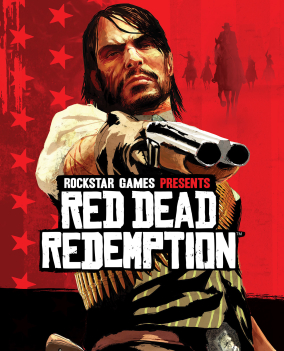
13. Red Dead Redemption (Rockstar, 2010)
12. Diablo II (Blizzard Entertainment, 2000)
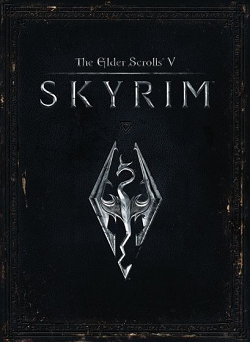
11. The Elder Scrolls V: Skyrim (Bethesda, 2011)
10. Grand Theft Auto IV (Rockstar, 2008)
9. Final Fantasy X (Square, 2001)
8. Mass Effect 3 (BioWare, 2012)
7. Metroid Prime (Retro Studios, 2002)
6. Portal 2 (Valve, 2011)
5. Halo: Combat Evolved (Bungie, 2001)
4. Portal (Valve, 2007)
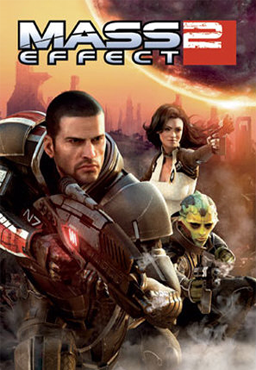
3. Mass Effect 2 (BioWare, 2010)
2. Star Wars: Knights of the Old Republic (BioWare, 2003)
1. Half-Life 2 (Valve, 2004)


Possible Coming Attractions
Grand Theft Auto V
Batman: Arkham Origins
Watch Dogs
Destiny
Metal Gear Solid V: The Phantom Pain
Halo 5
Halo 6

Wednesday, May 9, 2012

15 Years of Gaming, Part 17/Conclusion (2011)

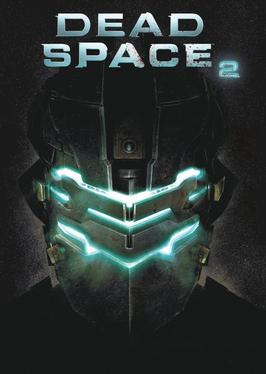
Dead Space 2

Release Date: January 25, 2011.
Platform: PC/360/PS3
ESRB Rating: M
Developer/Publisher: Visceral Games/EA
GameRankings: 89.36%
Completely Arbitrary Personal Score: 8.8/10 (Very Good)


The difference between Dead Space 2 and it's predecessor is less dramatic than something like, say, the difference between Mass Effect and Mass Effect 2, but it is noticeable. Perhaps the area it is most noticeable is in the main character. Isaac Clarke was not much more than a cipher in the first game, nearly mute and not all that interesting. Aside from his obsession with finding Nicole, his erstwhile girlfriend, Isaac doesn't emit much personality. This was a measured and deliberate thing. I'm assuming the developers felt the various hallucinations and breaks in reality would seem much more frightening if the player could just as easily assume they were the ones experiencing it. This is certainly not a bad idea (the Half-Life series has nearly mastered it), but it left the main character not seeming all that important or much of a character.

Of all the improvements the second game makes (and there are many), it is this sudden burst of character from Isaac that is the most important. He's not the most interesting character, but the fact that is one at all improves the narrative of this game tenfold, specifically when Isaac makes a sacrifice near the game's conclusion (spoiler: he survives). All in all, the Dead Space series is proving to be one of the few EA-produced series worth anything at all, and I anticipate the third installment, whenever it may be.


Dragon Age II

Release Date: March 8, 2011.
Platform: 360/PS3/PC/Mac
ESRB Rating: M
Developer/Publisher: BioWare/EA
GameRankings: 80.37%
Completely Arbitrary Personal Score: 8.0/10 (Good)


Dragon Age II is possibly the most infamous game in BioWare's long and storied history. It is not, however, the worst. After the underground success that was Dragon Age: Origins (which, before I go any further, is a superior game, despite what my scores might say), Dragon Age II was one of the most heavily promoted and anticipated games in BioWare's history. To say it was a disappointment is an understatement. I don't believe this is because DAII is a bad game. Quite the contrary. I believe the backlash occurred because DAII was a poorly marketed game. People thought they were getting a true sequel to the original game. They were not. They were getting a loose continuation of the world in which the first game took place in. Dragon Age is as well written a game as anything on the open market, featuring interesting characters, a remarkable (if small in scope) array of areas, and a bevvy of strenuous political choices and motivations to wade through, like and good BioWare game. It might be a below standard offering by BioWare's standards, but it's still one of the better games of 2011, and worth playing. Most other companies should be so lucky to have such a good "worst" game.


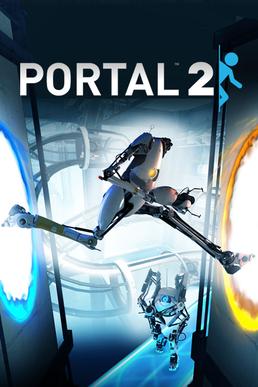
Portal 2

Release Date: April 19, 2011.
Platform: 360/PS3/PC
ESRB Rating: E 10+
Developer/Publisher: Valve
GameRankings: 94.54%
Completely Arbitrary Personal Score: 9.4/10 (Great)


Valve, ever the master craftsmen, took a bit of a gamble with 2007's Portal. A gamble that unequivocally paid off. What was originally included as a bit of a bonus on the Orange Box became possibly the most successful and most fully-praised bit, making a sequel a near guarantee. Before release, Valve described Portal 2 as a full-fledged game where the original had been simply an experiment. There is no better way to describe the divide between Portal 2 and it's predecessor. Portal 2 is a fully-formed, fully-developed game. A game that takes everything good about the original (which was everything) and expands to a near-caricature (without taking that last little step into ridiculousness). It is truly a masterpiece of black humor. Stephen Merchant and J.K. Simmons are stupendously good in their roles, as is the returning Ellen McClain (who was literally the only voice actor in the original game.) Almost everything that was good about Portal is better in Portal 2. It has an interactive, context sensitive soundtrack, for crying out loud. Just a magnificent game. There is one minor caveat, however. Because it's an actual game, Portal 2 lacks a bit of the surprise of the original. You really had no idea what to expect from Portal 1. Short, elegant, to the point and unbearingly endearing, Portal was the quintessential post modern video game. Portal 2 is fantastic, but perhaps not quite as seminal in thought or execution. The co-op makes up for that, however.


L.A. Noire

Release Date: May 17, 2011.
Platform: 360/PS3/PC
ESRB Rating: M
Developer/Publisher: Team Bondi/Rockstar Games
GameRankings: 87.72%
Completely Arbitrary Personal Score: 9.1/10 (Great)


L.A. Noire was (and still is) one of the most interesting and unique undertakings in gaming history. So much so that, unlike ANY of the games on this list (excluding possibly the two Portal games), Noire has almost no basis in combat. More so even than a game like Mass Effect, it is based almost entirely on dialogue. Using a nigh-revolutionary motion capture facial system, Team Bondi created a conversation system that, while maybe a little static (you'll notice the same facial expressions constantly), manages to skirt the edge of the uncanny valley while still seeming realistic, something that's increasingly difficult to do. A game that is based on talking, investigating and wondering less than straightforward action is not rare to see, out of an indie or B title. Too see it from one of the biggest game companies in the world is different. Add in the excruciatingly re-created world and attention to detail, and you have a sandbox game every bit as engrossing as GTA IV or Red Dead Redemption. Maybe not a world as accessible or blindingly fun as either of those games, and certainly not as good, but perhaps a more seminal affair. In the end, Noire was an experiment, a new way of designing games set in the mold of a historical epic. I can easily see another great GTA game, and I can certainly see another game like RDR at some point in the future. I'm not sure if I ever see another game quite like L.A. Noire.


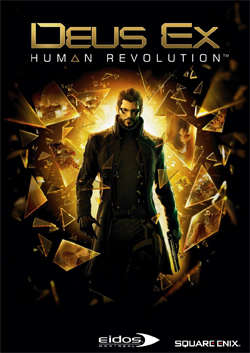
Deus Ex: Human Revolution

Release Date: August 23, 2011.
Platform: 360/PS3/PC
ESRB Rating: M
Developer/Publisher: Eidos Montreal/Square Enix
GameRankings: 89.41%
Completely Arbitrary Personal Score: 9.4/10 (Great)


Every year, there's one game I never see coming. A game that I play on a whim that ends up utterly and completely captivating me. Deus Ex: Human Revolution is not only one of those games, it may be the ultimate version of one. I never played either of the original Deus Ex games. For someone who presents himself as something of a gaming connoisseur, not playing one of the most influential and proverbially game-changing works int he history of the medium is a bit of a shame, to be sure. Perhaps I was too young. Perhaps I wasn't privy to a computer capable of running it. Whatever the reason, the Deus Ex games were something of an unknown to me. That changed when I bought Human Revolution. Equal parts Blade Runner, Mass Effect, and Ghost in the Shell, Human Rev is one of the most visually arresting games I can remember playing, and an eternal testament to of one my favorite sayings in gaming: graphics aren't as important as art design.

Speaking of design, DX:HR is as wonderfully sounding a game as I can remember. The voice acting isn't flawless, but when it has to be good, it's wonderful. The sound design is as convincing as it is ethereal. The music is...my God, the music. Forceful, haunting and every bit perfect for the world it inhabits, the music is possibly this game's biggest strength.

All this effusive praise of the game's design might sound like I'm dodging what is arguably the most important aspect of any game: how it plays. Have no fear; Human Revolution plays marvelously. A hybrid shooter/rpg/stealth/puzzle game set in an imaginative and eerily prescient 2027. It plays extremely well. It's hard for me to recommend a game more than I can Deus Ex: Human Revolution. It lives up to a legacy I was never even sure existed, and does so by being it's own game. Not a perfect game, but as ambitious and engrossing a game as I can remember, full of ideas and wonder. Play it.


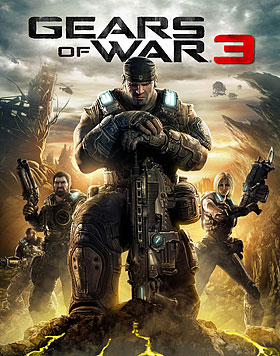
Gears of War 3

Release Date: September 20, 2011.
Platform: Xbox 360
ESRB Rating: M
Developer/Publisher: Epic Games/Microsoft Studios
GameRankings: 91.59%
Completely Arbitrary Personal Score: 8.7/10 (Very Good)


Gears of War 3 is all the platitudes you would want from the back end of a major trilogy. It wraps up the storyline started with 2006's Gears of War. It's bigger, badder and more entertaining. It's everything about the series distilled into it's purest, most effective form. And it picked a horrible year to release. 2011 is one of the strongest gaming years of this or any generation. For instance: I chose not to write about The Legend of Zelda: Skyward Sword for this year's edition, not because it wasn't good enough (it was fantastic), but because there were just too many other games, and I didn't feel like I played enough of SS to justify writing about it.

Gears of War 3 was very good, but I'm having trouble remembering it when so many other great games came out in close proximity. Gears 3 should have come out in 2010.


Batman: Arkham City

Release Date: October 18, 2011.
Platform: PS3/360/PC (Eventually Wii U)
ESRB Rating: M
Developer/Publisher: Rocksteady Studios/Warner Bros. Interactive Entertainment
GameRankings: 94.13%
Completely Arbitrary Personal Score: 9.3/10 (Great)


Batman: Arkham Asylum was one of those games I mentioned earlier: a total surprise that ended up being one of the best games of it's year. Batman: Arkham City, the sequel, had no such luxury. What very easily could have fallen victim to a bevy of unrealistic expectations (most of which from yours truly), Arkham City ended up surpassing expectations to usurp the title of "best superhero game ever" from its predecessor. This is due, mainly, to one thing and one thing only: the city. While not as big an open world as something like Fallout or Grand Theft Auto, Arkham City brought a BioShock-like level of detail and a bevy of Batman's best villains, along with a huge amount of lesser-known cameos (Kevin Conroy as Hush in particular). From a gameplay perspective, it's bigger, more complex and more satisfying than it's predecessor, while featuring a more taught story (although I'm starting to doubt the possibility of this game occurring during only one night).

Atmospheric, visceral and thoroughly exciting, this is one of the four best games of its year, which is saying something in a year like 2011.


The Elder Scrolls V: Skyrim

Release Date: November 11, 2011.
Platform: Xbox 360/PlayStation 3
ESRB Rating: M
Developer/Publisher: Bethesda
GameRankings: 95%
Completely Arbitrary Personal Score: 9.5/10 (Legendary)


Here it is. Skyrim. Another installment in Bethesda's life-destroying Elder Scrolls series, Skyrim is, on the surface, one of the most ambitious looking and feeling games ever to exist. Digging a little deeper? It's still an amazingly, mindblowingly big, detailed and enjoyable game. But it's not perfect. Like all Bethesda games, there's too much size, too many variables, that can throw a proverbial wrench in the system. Glitches are as common as ever, and in a game this atmospheric, they can be near deal-breakers at times.

Moving past that (admittedly big) hiccup, Skyrim also benefits from the tightest and most engrossing main plotline of any of the Elder Scrolls games. And those dragons. Only after severe amounts of playtime and leveling do they cease to be among the most adrenaline-pumping boss fights in all of gaming. The soundtrack is ethereal yet substantially beautiful. Like all Bethesda open-world games, an inordinate amount of enjoyment can be had by just picking a direction and walking towards the horizon. The world of Skyrim, the nothern-most province of Tamriel, is a cold and unforgiving place, where the winds whip at you almost as hard as the predators do. Aside from the cities (some of the most intriguing in all of the series), every settlement feels vulnerable and wild. And yet, there is a strange warmth to this game. A feeling of belonging. One of the single most wondrous maps in all of gaming, Blackreach (if you haven't checked it out, do so immediately). Untold wonders await you in Skyrim. Here be dragons.


This concludes (for now), my 16-part 15 Years of Gaming segment. By no means are these all of the games I have liked in my lifetime. These are just the ones I felt I had something to say about. If this is your first time or you've read them all, thank you, immensely, for reading. This has been maybe the first large-scale personal project I can remember completing, and easily the most fun. I'll probably be doing a 2012 round-up sometime in December or January, but this is the end of my scheduled reviews/recaps.

Tuesday, April 10, 2012

I Think You're Crazy

I am, at my core, a wispy and tenuous thing. For all my pretense and boisterous proclamations, I am a man a few convictions. Not a man, really. A child. A sad child, with no place to call home. This is why I've taken to twitter so thoroughly, I think. It's a place where I can find some measure of acceptance among people who share my interests. Were I to list my ten closest friends, seven would be people from twitter, at least. This is both a testament to it's all-inclusive impact upon my personal life and my own personal failings as a friend and as a social creature. I make friends well enough, when the mood to talk strikes me. I'm just piss poor at keeping them. Through no fault of their own, we grow apart. My fear of rejection is such that I'm rarely, if ever, moved to make any sort of commitment. Only strong bonds can survive such a process. Isolation is beautiful right up to the point where it's all you know.

In the past, the recent past, I thought this was a great reason (the best, probably) for me to become a writer. I'm decent enough at expressing my thoughts, and I have a not inconsiderable amount of knowledge on a great deal of things. It seemed to be the perfect career choice for someone with my...conditions (I've self-diagnosed countless times, but I don't ever see myself willingly accepting psychiatric treatment again. Not a good experience.). I thought writing was my calling. Until I actually tried it. The idea of someone, someone who I've probably never met, judging me by the things I've written in a state of emotion, terrify me to my very core. Even  now, I'm shaking a bit just imagining you reading this right now. In the not so distant past, an acquaintance informed me that a possible avenue of employment (or at least recognition) would not be open to because of how I can act on twitter, from time to time. "Unstable," is a kind word for it. I understand completely. I wouldn't hire me.

While you may just cross this off as cowardice (which it certainly is, to some extent), it's almost certain that you, whoever you are, have felt doubt at some point. I'd venture to guess that you aren't human if not. At least not a human I would want to associate with. But I'd also venture to guess that you've never felt the sort of crushing doubt I've felt on a near daily basis for the past five years. It's gotten to the point where trying to articulate what it is is like trying to articulate how the sun feels. You can try, but you'll never fully grasp how deeply it runs in you.

If there's anything I can safely self-diagnose as, it's Avoidant Personality Disorder. I've always been shy and reserved, especially through high school (as was any nerd worth his salt). Hell, I didn't tell the woman I loved how I felt until nearly two years after graduation, and I'd had those feelings since Freshman year. Needless to say, that was not a successful endeavor (again, my fault). I would be lying if I said I'd never contemplated suicide, but I'd also be lying if I ever said I'd ever really pondered how I'd actually do it. It's not really something I feel would work. There'd be no music, for one. Music is, almost single-handedly, my tether to this world. I'd have died by now without it. Just ceased to be.

Regardless, this is where this little manifesto must come to an end. I'm tired, and this is already too long as it is. Just getting my thoughts out there on a another sleepness night with little hope. I'll never be a basketball writer.

Saturday, March 24, 2012

15 Years of Gaming, Part 16 (2010)

Mass Effect 2
Release Date: January 26, 2010.
Platform: 360/PC (later PS3)
ESRB Rating: M
Developer/Publisher: BioWare/EA
GameRankings: 95.6%
Completely Arbitrary Personal Score: 9.6/10 (Legendary)


Look past the horrific box art. Look past the meandering, confused main plotline that only really pays off at the very end. Look past the relative lack of RPG elements. What's left is still one of the most daring, absorbing and best games ever made. The original Mass Effect, while certainly a great game, perhaps reached a little too far, a little too high. The concepts were great, but the execution (and more importantly the polish), was underwhelming at times, ending sequences aside. It was very much an experiment, albeit a high budget, Triple A one.

The second Mass Effect suffers from no such lack of polish. It's staggeringly massive and detailed, featuring a cast of characters at least double in size of the first, and yet no less intriguing. In fact, it's in the other characters in your party that this game truly shines. Their personal quests are among the most involving and high-stakes in the entire game, as they all look to Commander Shepard to help them put their affairs in order before what looks to be a suicide mission. Except that it isn't. Or it is, depending on how you play your proverbial cards, and how prepared those cards are.

This is possibly BioWare's magnum opus (at least until the third game comes out) and one of the best games of this new decade, full stop. I recommend it heavily if you haven't played it (or the first one), or even if hardcore, old school sci-fi mixed with adrenaline pumping action on a scale not usually seen in video games is your thing. It should be.


BioShock 2
Release Date: February 9, 2010.
Platform: PS3/360/PC
ESRB Rating: M
Developer/Publisher: 2k Marin/2k Games
GameRankings: 87.87%
Completely Arbitrary Personal Score: 8.5/10 (Very Good)


BioShock 2 is a game I wasn't sure I thought should exist. The original ended on a nearly pitch-perfect tone, and the sequel wasn't even being made by all the same people. By all rights, it was an unnecessary and possibly terrible game. It wasn't. While the plots and twists weren't as sharp and shocking as the first one, the protagonist and the pacing were miles better, and while the setting and ideologies behind the game were wearing a little thin, the gameplay was arguably better (which was a weak point I found with the original). It's not as good as BioShock, but few games are. It expanded and elaborated upon almost everything that was great about the original.

I will say this, however. It's probably a good thing that the next BioShock isn't set in Rapture. I'm would have had a hard time believing there are any splicers left to kill if there was a third game set in Andrew Ryan's underwater dystopia.


Final Fantasy XIII
Release Date: March 9, 2010.
Platform: PS3/360
ESRB Rating: T
Developer/Publisher: Square Enix
GameRankings: 85.17%
Completely Arbitrary Personal Score: 8.3/10 (Good)


The Final Fantasy series is one that has been slowly fighting the passage of time over the last decade. 2001 saw the release of Final Fantasy X, in my opinion one of the two or three best of the entire series, and the last entry to follow the tried and true turn-based methodology followed by all the others. Since then, the series has scrabbled to find it's way in a more modern gaming landscape. FF12, while a good game, held very little of the magic so often found in its predecessors. FF13 perhaps captures a little more of that old charm that made the Final Fantasy series one of my favorites growing up. The combat system is fluid and truly original, instead of being the clunky clone found in FF12. The characters, while still annoying for long stretches of time, were maybe a little more indelible than those found in 12. The setting, while not as iconic as Ivalice, is visually striking (even if a few too many hours are spent in the same places). FF13 is not a bad game. In fact, it's a better game than 12. But it's not great. And it's still a lateral step rather than a forward one. FFX was a last great gasp. Everything since then has been a wheeze.


Red Dead Redemption
Release Date: May 18, 2010.
Platform: PS3/360
ESRB Rating: M
Developer/Publisher: Rockstar North/Rockstar Games
GameRankings: 94.18%
Completely Arbitrary Personal Score: 9.3/10 (Great)


Manifest Destiny. If there's any phrase that describes Red Dead Redemption, it's this one. The year is 1911. The old west is at it's end. Civilization is spreading, unchecked and unstoppable. The only thing worse than the lawless men who terrorize the wilderness are the civilized men who control it. This might be sounding a little pompous, but if there's anything this game is about, it's the expanding moral bankruptcy of the fledgling American Empire.

How does this translate to a game instead of a concept? Quite well. Few games, if any, quite capture the essence of loneliness like RDR does. It's not the biggest open world in gaming, but sometimes it feels like it, taking place over an extremely diverse landscape that combines pastiches of Texas, New Mexico, Arizona, Colorado and, like all good westerns, Mexico. Speaking of good westerns, many of the characters, towns and situations are homages to many of the great westerns (most noticeable is the Man With No Name's poncho).

Red Dead Redemption sits alone in the history of gaming as a singularly lonely work, one that combines the reality and the fiction of the old west into a sad, desperate game that is as affecting as anything Rockstar has ever done. And it's damned fun to boot.


Halo: Reach
Release Date: September 14, 2010.
Platform: Xbox 360
ESRB Rating: M
Developer/Publisher: Bungie/Microsoft Game Studios
GameRankings: 91.71%
Completely Arbitrary Personal Score: 9.1/10 (Great)


The Halo series has never been one praised for it's realistic depictions of war. And for good reason. For the most part, these games are high sci-fantasy, starring an invincible cyborg as he fights valiantly against an unstoppable alien horde and boogeyman from the darkest corners of the id. But there is, despite what you might think, despite what you may have been lead to believe, more. The same sort of "more" that was in 2009's dark little masterpiece ODST. The same sort of "more" you might find in an actual wartime scenario: the prolonging of the inevitable. It's readily apparent, early  on (even without the sort of familiarity with the background material of the Halo universe that I'm writing from) that the battle for Reach will be lost. No matter what you do, no matter what your squad does, you will lose. But that doesn't mean you can't die trying. And die trying you do.

With every "we just need to buy some time," to every "we still have a chance" in the script, that experience of sacrifice paints the narrative of Halo: Reach in shades the other Halo games never really had to use. As Bungie's swan song, it does as good a job as possible in encapsulating what made the Halo games maybe THE premiere series of the 2000s, while simultaneously being different enough from the other games in tone to be it's own legitimate game. From the start, you that it's the end, in more way than one.


Fallout: New Vegas
Release Date: October 19, 2010.
Platform: PC/360/PS3
ESRB Rating: M
Developer/Publisher: Obsidian Entertainment/Bethesda Softworks
GameRankings: 83.8%
Completely Arbitrary Personal Score: 8.6/10 (Very Good)


New Vegas is another 2010 sequel that, to begin with, I wasn't sure should exist. Fallout 3 was such a singular, wonderful title, that I wasn't convinced that a sequel, a sequel developed by another studio nonetheless, was necessary. And, much like BioShock 2, I was wrong. Where that game built off what was good about the original, with minor additions, Fallout: New Vegas builds off of what's different about it than it's predecessor. It's similar to Fallout 3 in setting and name. That's about it. Set in the significantly more developed area around what used to be Las Vegas, New Vegas takes place in a more political world. Notice I didn't use the word "civilized." Nothing in the Fallout universe can ever hope to have such lofty aspirations.

Fallout: New Vegas isn't as good as its decorated predecessor, but then again, few games are. It comes close enough (while being different enough) to come wholly recommended to anyone who knows that war never changes.


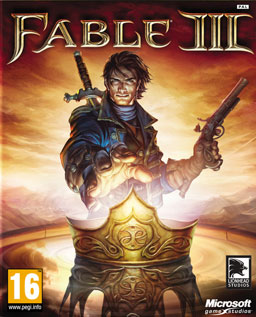
Fable III
Release Date: October 26, 2010.
Platform: Xbox 360/PC
ESRB Rating: M
Developer/Publisher: Lionhead Studios/Microsoft Game Studios
GameRankings: 80.52%
Completely Arbitrary Personal Score: 7.9/10 (Above Average)


Fable III is unique among the series for finally, finally, living up to at least some of Peter Molyneux's lofty praise and otherwordly hype. After twice promising the moon and delivering just a Polaroid, Molyneux's final (?) entry into the Fable series is the biggest, most ambitious, most tensely plotted entry in the series. That doesn't mean it's the best.

Where the third game differs from the others is in it's political aspirations. The hero does not become any more powerful, in a video game sense, than either of the other Fable protagonists, but he or she does become significantly more powerful politically. Where the second game saw you become a king, the third game sees you become a ruler. Alliances, economics, treaties: everything that one could reasonably expect to come with being a monarch is present in some form or another, and it adds a touch of Real Time Strategy that I found both surprising and refreshing for a game of this type. Another great addition is the co-op feature, which allows a friend to join your game (with their hero) at any point in time, building their character to be just a strong physically as you. While it's nothing novel, it is well implemented.

Why isn't Fable III the best in the series? For precisely the same reason. The first game was simply the journey of a kid growing into an adult, and maybe saving the world along the way. There was a sense of anonymity and...wonder that seems to be lacking (purposefully so) in the sequels. I really can't describe it. That being said, Fable III is still wonders better than the second game. Also, Stephen Fry and John Cleese are in this game. That's certainly never a negative.


Friday, March 16, 2012

Obligatory March Madness Tie-In: More First Round Action!

Hello. Shall we continue?


Miyamoto Regional


#1 The Legend of Zelda: Ocarina of Time (Nintendo, 1998) vs #16 The Legend of Zelda: The Wind Waker (Nintendo, 2003)

This Legendary matchup (it's the Miyamoto Region, what other games were I supposed to go with?) went into overtime, as the newer, showier Zelda looked to defeat it's older, also showier predecessor. One of these was called the greatest game of all time. The other was called a travesty by certain VERY undesirable sections of the alltogether undesirable Nintendo fanboy swarm. The joke is that they're the same game. One just has cel-shading. That one looks better now, and it will continue to look better in the future. Wind Waker wins.


#8 Super Smash Bros.: Melee (Nintendo, 2001) vs #9 The Elder Scrolls III: Morrowind (Bethesda, 2002)

Morrowind, one of the biggest games of its time, takes on SSB: Melee, one of the most focused games of its time, and- *falls asleep*.

Melee wins. Because this.


#5 Fallout 3 (Bethesda, 2008) vs #12 Star Wars Jedi Knight: Dark Forces II (LucasArts, 1997)

I love Jedi Knight. I really do. It's a game well before it's time. It held the title of my favorite Star Wars game for nearly 7 years. It had the first official live action Star Wars footage filmed since Return of the Jedi.

Fallout 3 has Liam Neeson. As your father. Jedi Knight has no chance. This one's over by halftime.


#4 Metroid Prime (Retro Studios, 2002) vs #13 Lost Odyssey (Mistwalker Studios, 1998)

Lost Odyssey was a quiet, literary little throwback to a simpler time in RPGs. Metroid Prime was a quiet, solitary little that took what should have been a throwback to the Metroid games of yore and turned into some sort of mutant behemoth that only knows how to be amazing. Art design is a gift, and Metroid Prime has this in spades.

#6 GoldenEye 007 (Rare, 1998) vs #11 Jade Empire (BioWare, 2005)

GoldenEye was great, but have you played it in the past decade? No, thanks. Jade Empire is criminally underrated. Not anymore. It finally has the recognition it DEMANDS in this silly bracket that 50 people will read.

You're welcome, BioWare.


#3 Halo 3 (Bungie, 2007) vs #14 Halo 3: ODST (Bungie, 2009)


The last game in the Halo trilogy faces it's own spawn in late west-coast matchup. Master Chief was dominant for the favorites, with more rebounds than lines of dialogue. The scrappy underdog fought back with Nathan Goddamn Fillion, but was eventually worn down to the verge of defeat. Then the Halo Array was activated and all advanced life was wiped clean in the entire known galaxy. Oops? ODST wins, just because.


#7 Gears of War 3 (Epic Games, 2011) vs #10 Deus Ex: Human Revolution (Eidos Montreal, 2011)

Gears 3 had a great gameplan in the works, and then the game's ending was leaked and for some reason they didn't change anything. DXHR star player Adam Jensen, despite repeatedly stating that he never asked for this, recorded and sextuple-double and personally assassinated 3/4ths of the Gears cast with these wicked elbow blade things he's got.

Gears 3 forfeits due to lack of players/coherent plotting.


#2 Mass Effect 2 (BioWare, 2010) vs #15 Unreal Tournament (Epic Games, 1999)


Unreal Tournament steps up to the proverbial plate with the sort of swagger only a late 90s shooter could ever hope to conjure. Squealing guitars and crude-looking bits of what we're supposed to believe are people rain down around the arena. When the dust clears, not a single opposing player is standing. Unreal Tourney reigns triumphant.

Then everyone realizes that instead of ME2, Unreal had been fighting longtime nemesis Quake III: Arena, Commander Shepard having used a renegade interrupt to convince them to fight in his stead. In fairness, he had told Unreal Tourney of this development, but they had ignored him while screaming something about frags.

Mass Effect 2 wins in a landslide.

Obligatory March Madness Tie-In: The First Round!

Hello and welcome to the first second round of play here at the OMMT Tournament! Without any further adieu, and because this premise is already wearing thin, let's get the action started. Hooray!


Kojima Regional

#1 Grand Theft Auto III (Rockstar, 2001) vs #16 Final Fantasy XIII (SquareEnix, 2010)

FFXIII, fresh off it's wondrous comeback victory by default in the play-in game, wows the competition with it's beautiful graphics and fully voiced action. It then makes a furious assault headlined by it's frenzied fighting system and memorable characters. And then Claude from GTA III walks up and blows them away with a tank. While already having 6 stars. Impressive.

Final Score: GTA III- Tank. FFXIII: Not Tank.


#8 Max Payne (Rockstar, 2001) vs  #9 Metal Gear Solid 2: Sons of Liberty (Konami, 2001)

The second of Rockstar's crop of 2001 games heads into battle against one of 2001's most anticipated titles. It is, in all honesty, a heated contest throughout, with Max Payne's international conspiracy theme cancelling out MGS2's international conspiracy theme. Then, right near the end, Raiden gets naked and MGS2 eats itself in front of a live, 2001 national television audience. Tragic to see. Max Payne wins.

Final Score: Max Payne- Constipation Face Max Payne MGS2- Naked Raiden


#5 Gears of War (Epic Games, 2006) vs #12 Perfect Dark (Rare, 2000)

Gears of War was all like "Hell naw we got chainsaws." But then Perfect Dark was like "we got laptops that turn into turrets, son!" Then Cliff Bleszinski showed up and called everyone lame and everyone exploded and died. Except Marcus Fenix, because he is apparently made of granite and doesn't wear a helmet because he doesn't have time to bleed. Perfect Dark would have survived, too, except it forgot to bring the Expansion Pak that held it's entire campaign. Whoops?

Survivor: Gears of War


#4 Batman: Arham City (Rocksteady, 2011) vs #13 Warcraft III (Blizzard, 2003)

Warcraft III, mismatched from the start, held off valiantly through 30 minutes of grinding, slogging, true RTS style ball denial. Arkham City, through no fault of it's own, was down by half a dozen entering the final five minutes of play. Then Arkham City remembered that it stars Batman, and it broke both of Warcraft III's collarbone/shin/spleens. The game was called due to blood loss.

The Winner, Vengeance, the Night: Batman


#6 BioShock (2k Games, 2007) vs #11 Halo: Reach (Bungie, 2010)

BioShock uses it's high-concept concept to race out to what seems to be an insurmountable lead, only to see Bungie's last Halo game make a furious comeback based solely on the fact that it is actually fun to play in large bursts. Unfortunately, it couldn't maintain it's own momentum, which is sad considering it's literally the easiest thing for a Halo game to do. BioShock wins in one of the better contests thus far.

#3 Half-Life 2 (Valve, 2004) vs # 14 Dragon Age: Origins (BioWare, 2009)


Half-Life 2 wins solely on the strength of one level. Ravenholm. Dragon Age fans get all upset and start complaining about how their game, the greatest game ever made, is so unjustly neglected. No one listens. Especially not BioWare. Half-Life 2 just won on the strength of one level alone. No big deal.

Has Ravenholm: Half-Life 2.

#7 Resident Evil 4 (Capcom, 2005) vs #10 Final Fantasy VIII (Square, 1998)


FFVIII comes agonizingly close to pulling an upset, until everyone realizes how terrible most of it's characters are and sobers up. The junction system is still cool, I guess. RE4 survives despite it's lack of coherence and and semblance of holding up over time. Hooray!

#2 GTA: San Andreas (Rockstar, 2004) vs #15 Super Smash Bros. Brawl (Nintendo, 2008)


Brawl, though a decided underdog, becomes one of the darlings of the pre-tournament, building up a nigh-ridiculous amount of hype around itself. Then, Sonic grabbed a Super Smash and killed all the other players. San Andreas in a landslide.